There’s something quietly magical about the r/wordgames subreddit. While the bigger gaming corners of the internet chase AAA spectacle and battle-pass FOMO, this corner stays laser-focused on the pure joy of letters, semantics, and clever constraints. Every week, solo developers and hobbyists drop new prototypes, daily challenges, and full-blown browser games, then stick around in the comments begging for honest feedback. Last week (roughly September 22–28) was no exception—another healthy crop of player-made word games that prove the genre is still inventing itself.
Here’s the roundup of the most interesting new releases and showcases that caught my editor’s eye.
Clearest Signal
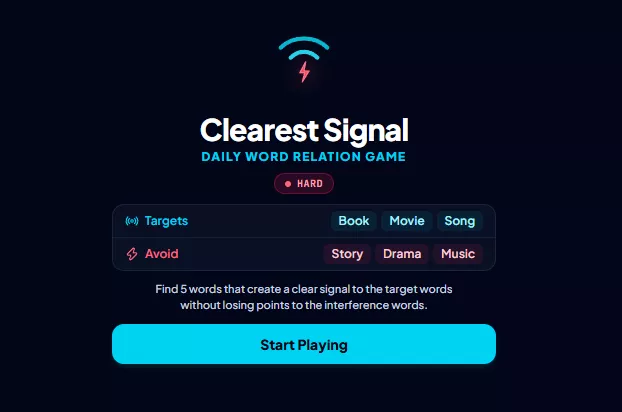
A daily word-association puzzle that feels like the lovechild of Codenames and Semantle. Each day you’re given three target words and three decoy/avoid words. Your job: submit five words that sit tightly in the semantic orbit of the targets without drifting into the decoys.
The launch puzzle, “Royal Court,” offered targets like crown, throne, and castle while warning you away from chess, bishop, and knight. It’s a delightful exercise in thematic precision—one wrong association and you’re sunk. Built to live right inside Reddit, it’s frictionless and smart. Exactly the kind of daily brain-teaser that can earn a permanent spot in your morning rotation.
DailyGRAM #001
The developer’s pitch was refreshingly self-aware: “I know this sub gets loads of ‘I made a word game’ posts, buutttt… this one only takes 60 seconds.” And that honesty works. It’s a lightning-fast daily challenge that respects your time while still delivering that little hit of linguistic satisfaction. Perfect for the player who wants the ritual without the commitment.
WORTMEISTER
Pick a word length, then start guessing letters. Correct ones get “stamped” onto tiles; wrong guesses burn limited attempts. Win and your streak grows; lose and it resets. Clean, readable, and driven by that classic risk/reward tension. It’s the kind of straightforward letter-guessing loop that still feels fresh when the streak system is tuned just right.
Project Word (Early Beta)
This one’s more ambitious. A five-letter word game that layers resource management and long-term planning on top of vocabulary skill. Using a letter now might leave you stranded later. The goal is simple on paper—survive 15 words before you run out of legal moves—but the decision-making gets deliciously tense.
No account required, free to play, and the developer is actively hunting for feedback on anything confusing or frustrating. Early-beta roughness is expected, but the core idea of treating letters as finite strategic resources is genuinely compelling.
WordPhoria
A hexagonal word-path game currently in TestFlight. Drag through neighboring letters to form words and work your way from the left side of the board to the right. The board itself evolves as you play, and you can choose between a relaxed Causal mode or the more aggressive Chaser mode.
The developer has been iterating with a small test group and is targeting a wider release soon, with a solid free-content promise. Spatial word games are still under-explored territory; this one looks like it has real legs.
The Quiet Standout: An Unnamed Daily Game Born from Necessity
One of the most affecting posts of the week came from a programmer whose partner spends three hours on dialysis three times a week. He built a free daily word game inspired by Wordle and Squares specifically to help fill those long sessions. Shared first with close friends, then opened to the subreddit with a simple request for feedback.
No flashy marketing, just a thoughtful tool made for someone specific. Those are the stories that remind you why indie word games matter.
What Last Week Told Us
The dominant mood on r/wordgames remains healthy and constructive. Developers post with clear titles, playable links, and explicit calls for criticism. Players respond in kind. The mechanical trends are clear: pure guessing is no longer enough. Creators are mixing semantic boundary-pushing, limited resources, evolving boards, and ultra-short session lengths. Daily resets and streaks still rule retention, but the best new entries add just enough strategic friction to feel distinct.
Accessibility is non-negotiable—most of these games are free, browser-based or mobile-friendly, and require zero sign-up. That’s the quiet strength of this scene.
If you care about language as a playground rather than just a delivery system for narrative, make a habit of checking r/wordgames. The next clever twist on letters is probably already sitting in a new post, waiting for someone to play it and tell the creator what works and what doesn’t.
That’s the real game loop here—and it’s a good one.